
Element Bio at JPM26
And what are we expecting in February from their NovaSeq killer announcement?

Element Biosciences presented in this years JP Morgan Healthcare and we are highlighting here the main announcements from their presentation.
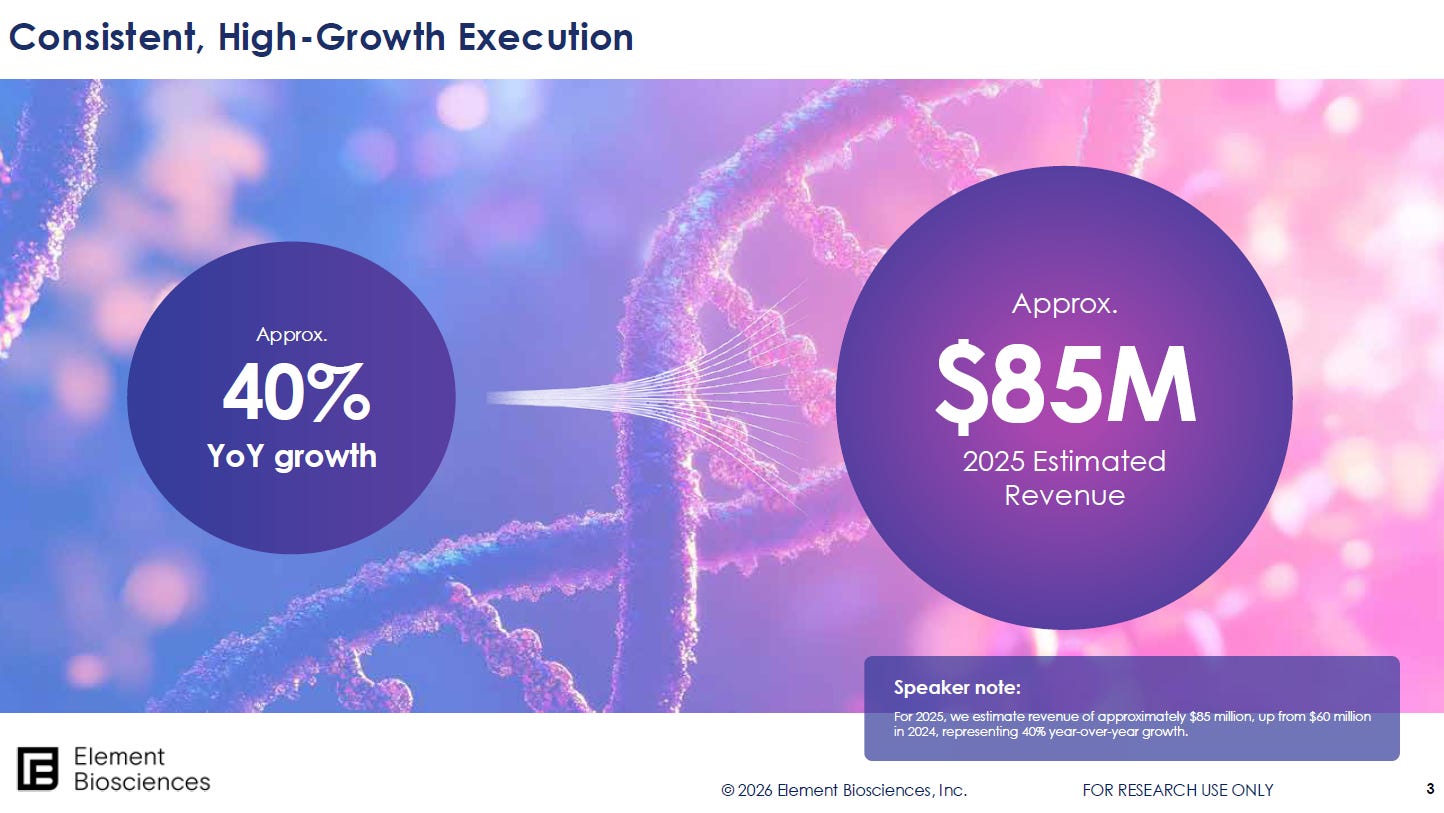
They made 58 million dollars in revenue in 2025, which is a bit more than half of what PacBio made after selling their products for a couple of decades.
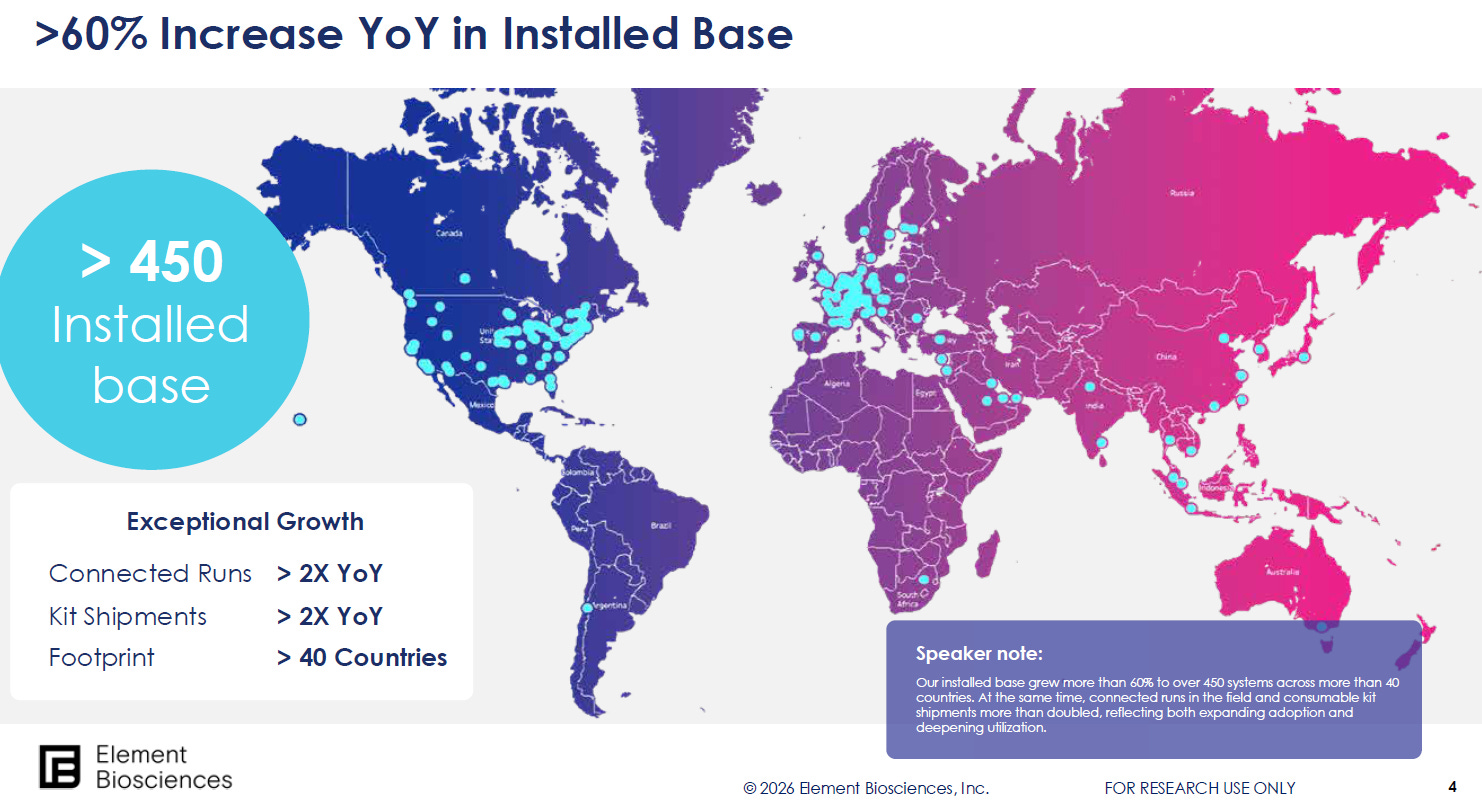
The AVITI install-base has grown to over 450 instruments, mostly in North America and Europe, but with a healthy presence in the Middle East and Asia. They shipped twice as many instrument this year than before, and the number of connected runs has also grown to twice as many as last year. A connected run here is a sequencing run where the instrument is connected to the Element HQ servers and reports metadata on the progress of the run. Some customers will prefer to use their AVITI disconnected from the Internet, thus not providing metrics on utilization.
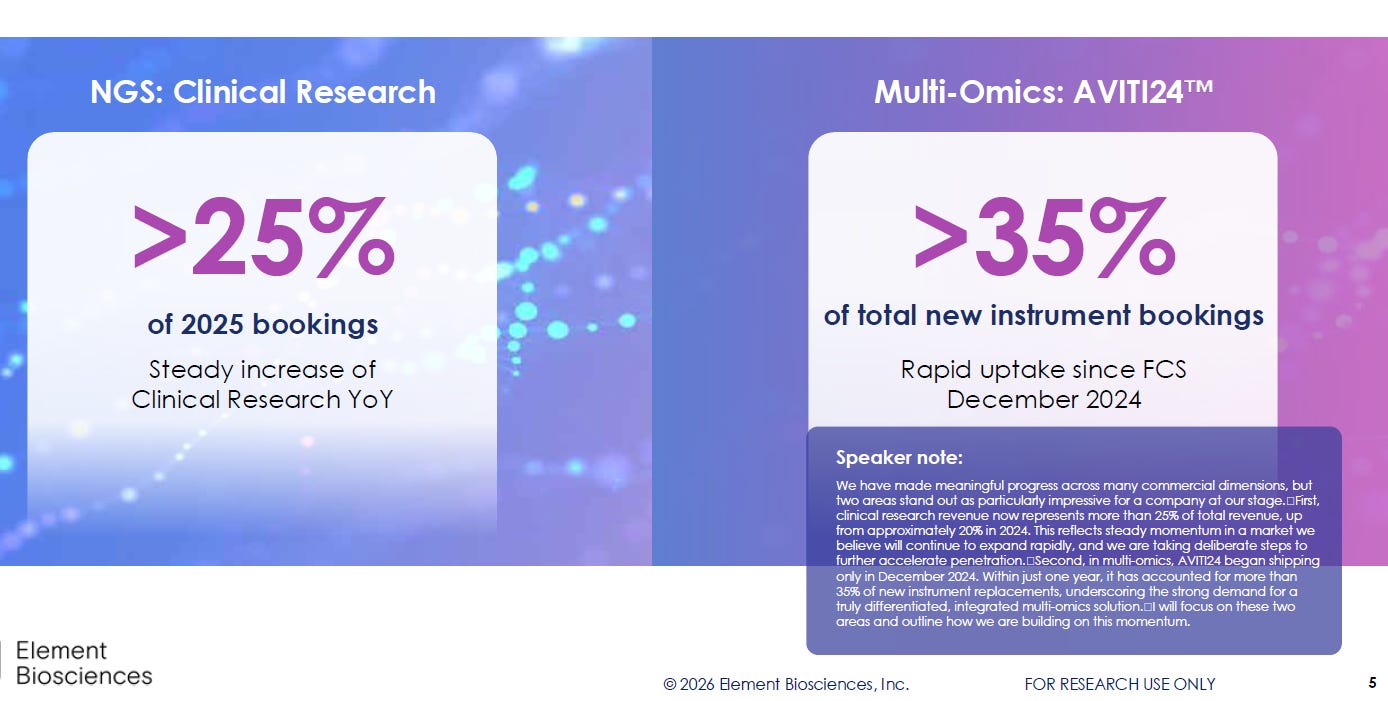
The new AVITI24 NGS+Multi-Omics (NGSX) instrument now represents more than 35% of the new instrument booking, with rapid uptake since December 2024 when it was made generally available.
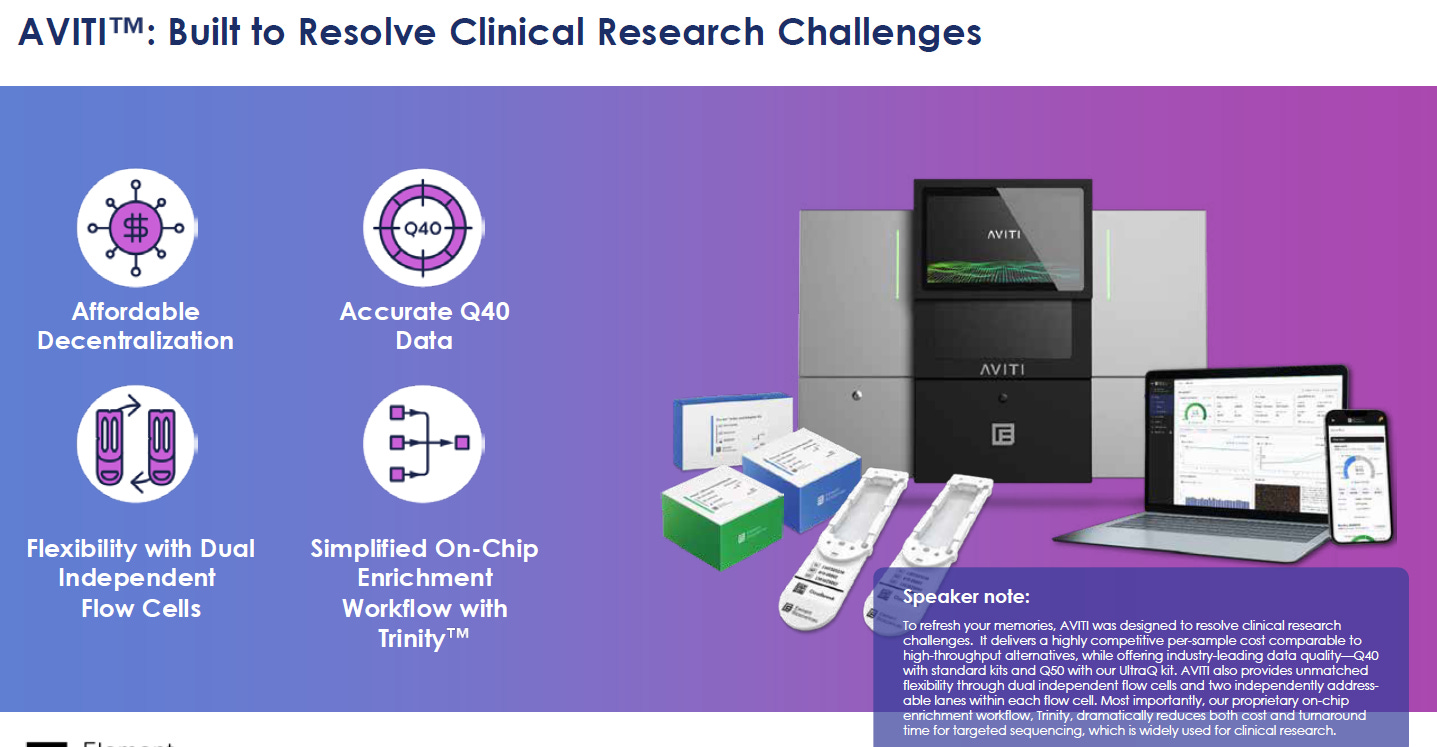
The AVITI instrument, the first from Element Bio, offers affordable decentralization, accurate Q40 data, flexibility with dual independent flow cells, and simplified on-chip enrichment workflows. This is an attractive mid-throughput instrument very similar to what Illumina offers in their NextSeq platform.
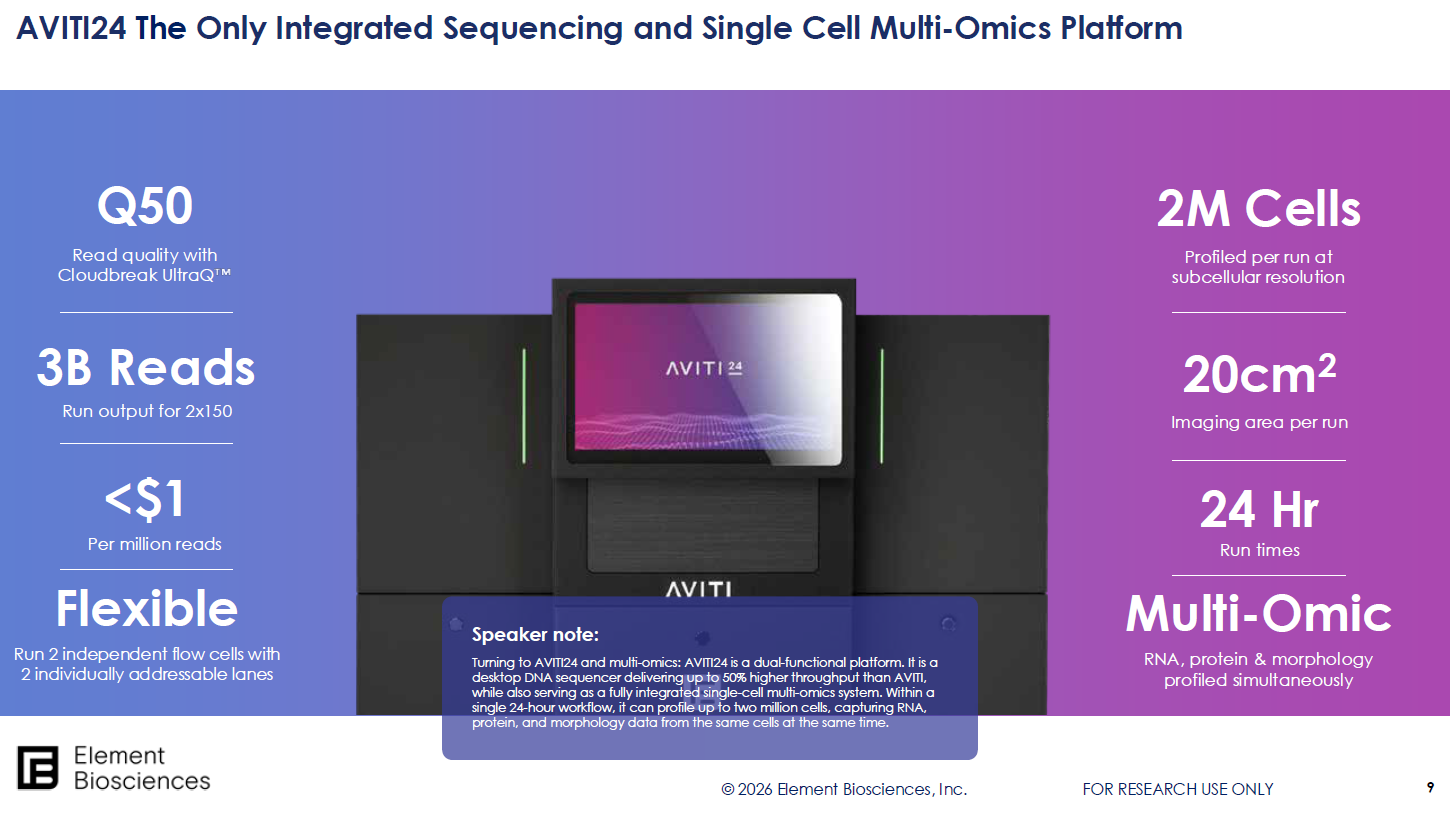
In comparison, their AVITI24 instrument offers read qualities to up to Q50 with the Cloudbreak UltraQ settings. It offers up to 3 billion reads in 2 by 150 configuration. It offers run settings for counting applications where the price per million reads goes below one dollar, which only a few NGS companies can offer.
On the Multi-Omics side, it offers profiling at subcellular resolution for up to 2 million cells per run, with an imaging area of up to 20 square centimetres, in runtimes of 24 hours that deliver RNA, protein and morphology readouts simultaneously.
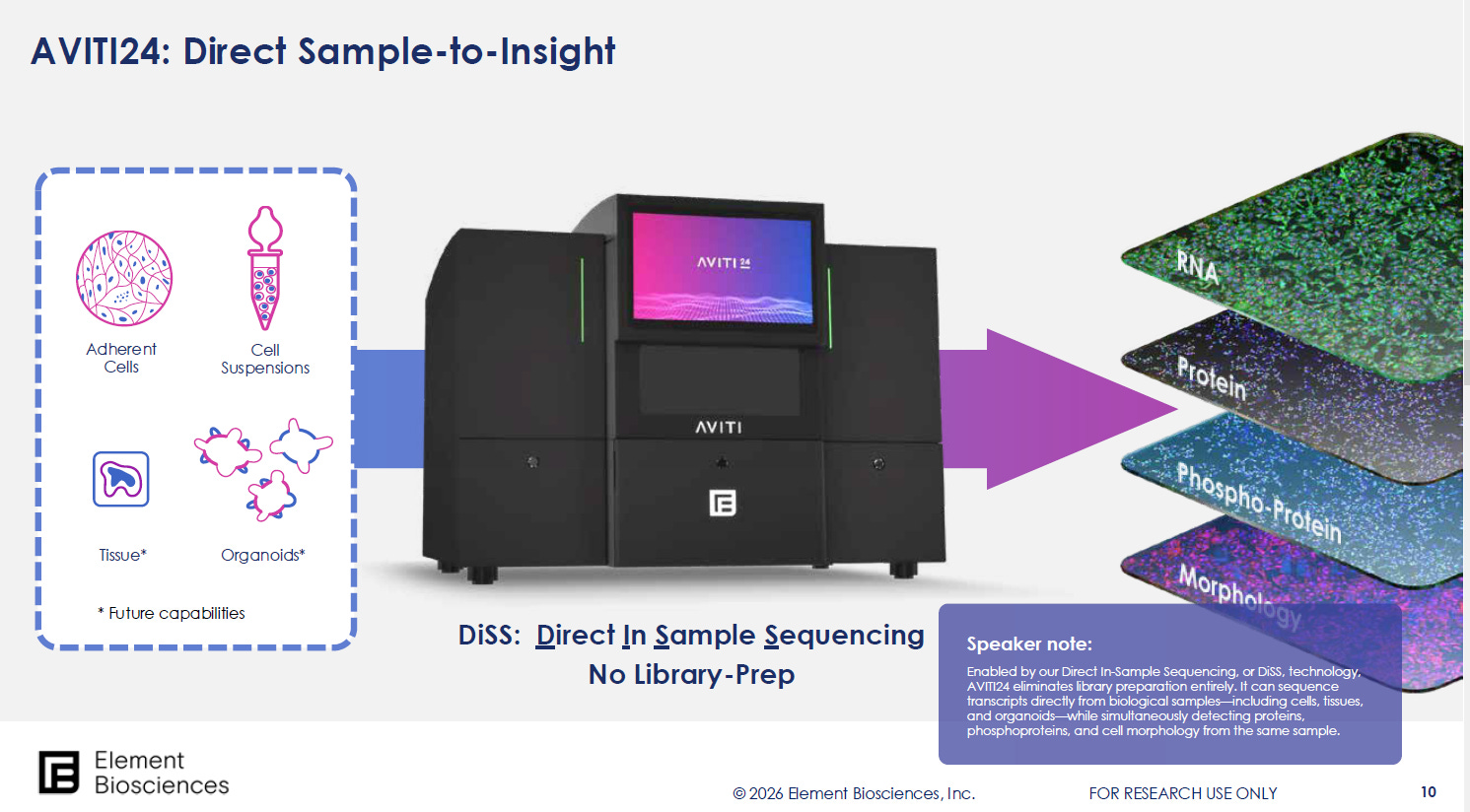
Unique to the AVITI24 is the Direct In Sample Sequencing (DISS). This method eliminates library preparation entirely. It can sequence transcripts directly from the samples, starting with cells, but also tissues and organoids. At the same time, it can detect proteins, phosphoproteins, and cell morphology as part of the assay of the same sample.
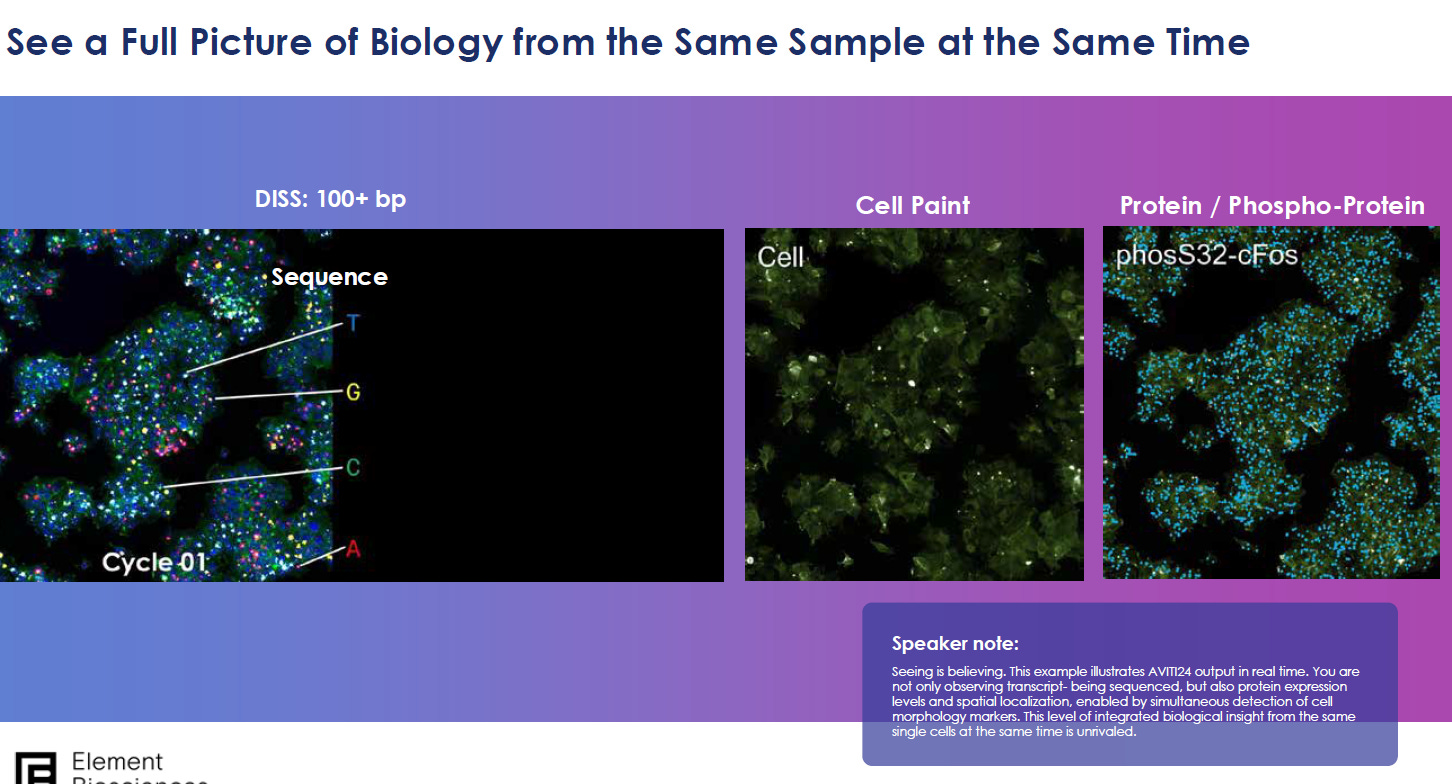
The slide above shows the AVITI24 output in real time, with the blue, yellow, green and red spots coinciding with the T, G, C and A nucleotides being sequenced. This level of integrated biological insight from the same single cell at the same time is unrivalled.
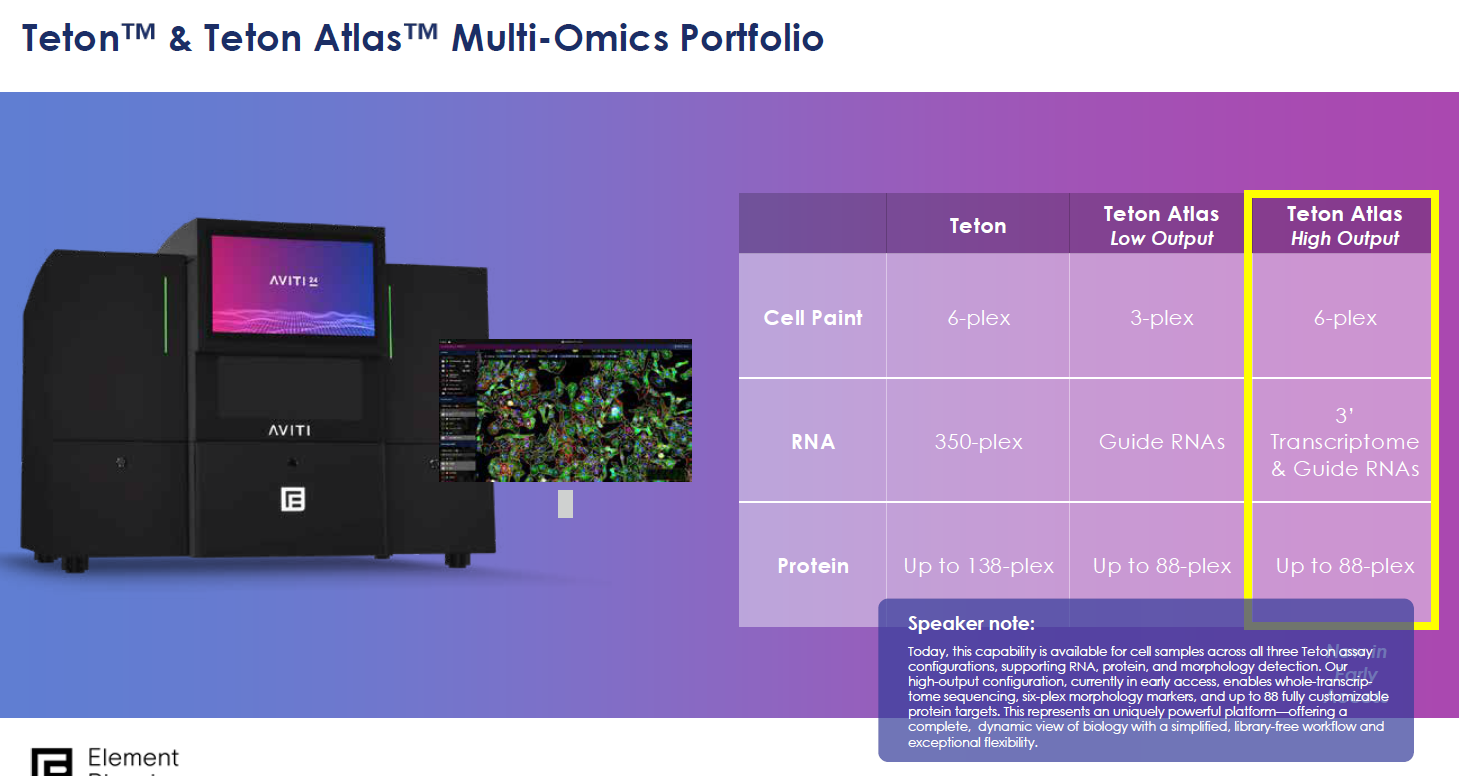
The Teton kits come in different configurations, one for standard 6-plex cell paint, 250-plex RNA and up to 138-plex protein, but there is also a Low Output version for Guide RNAs, and now one for High Output configuration that is capable of doing the entire 3’ transcriptome plusg guide RNAs.
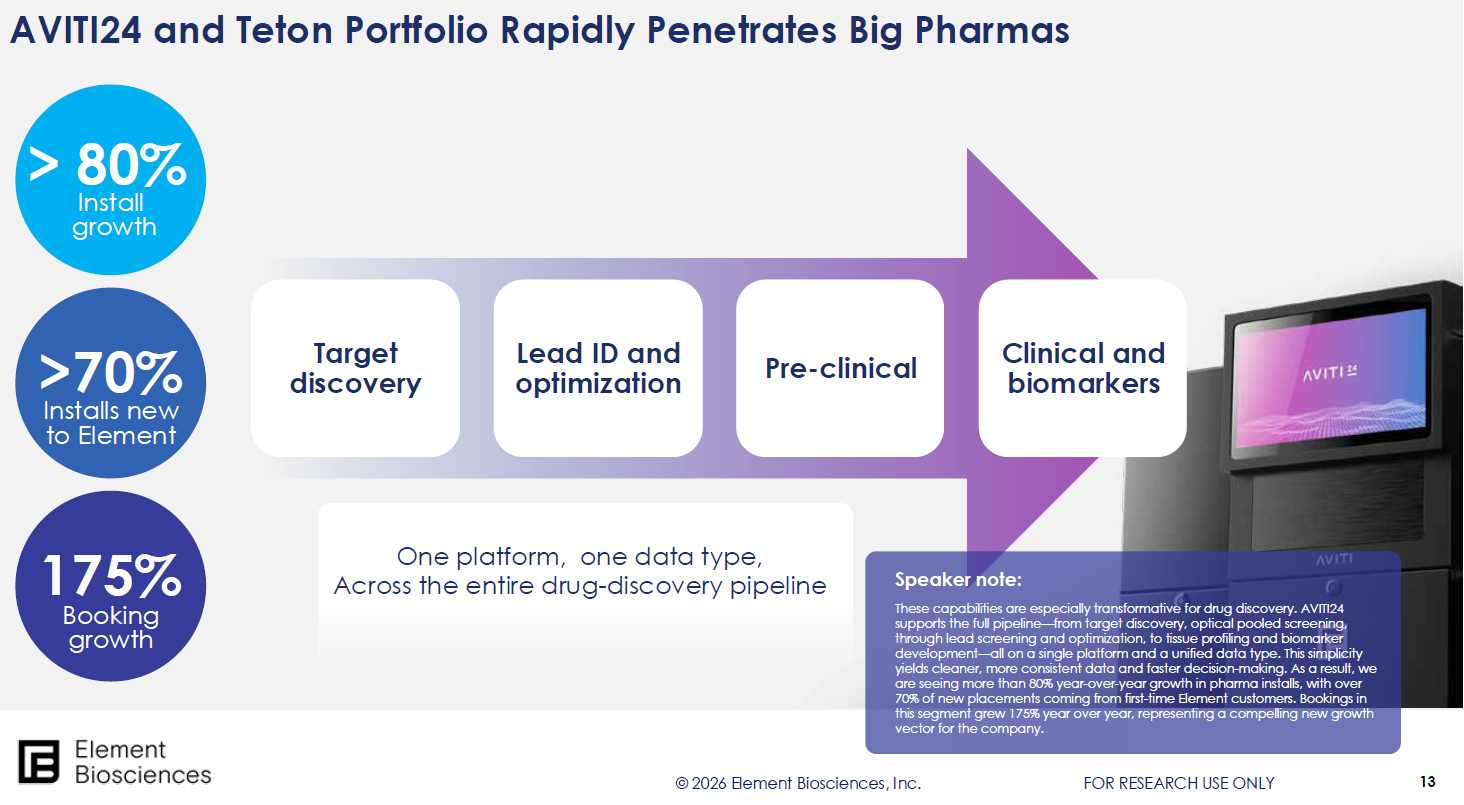
These capabilities are especially transformative for drug discovery. This process by companies deciding which genes to target (target discovery) using experimental setups like CRISPR screening. It then goes into Lead Screening and Optimization, where tissue profiling and biomarker development are key. The AVITI24 saw bookings in the biopharma segment grow to 175% YoY, a new vector of growth for Element Bio.
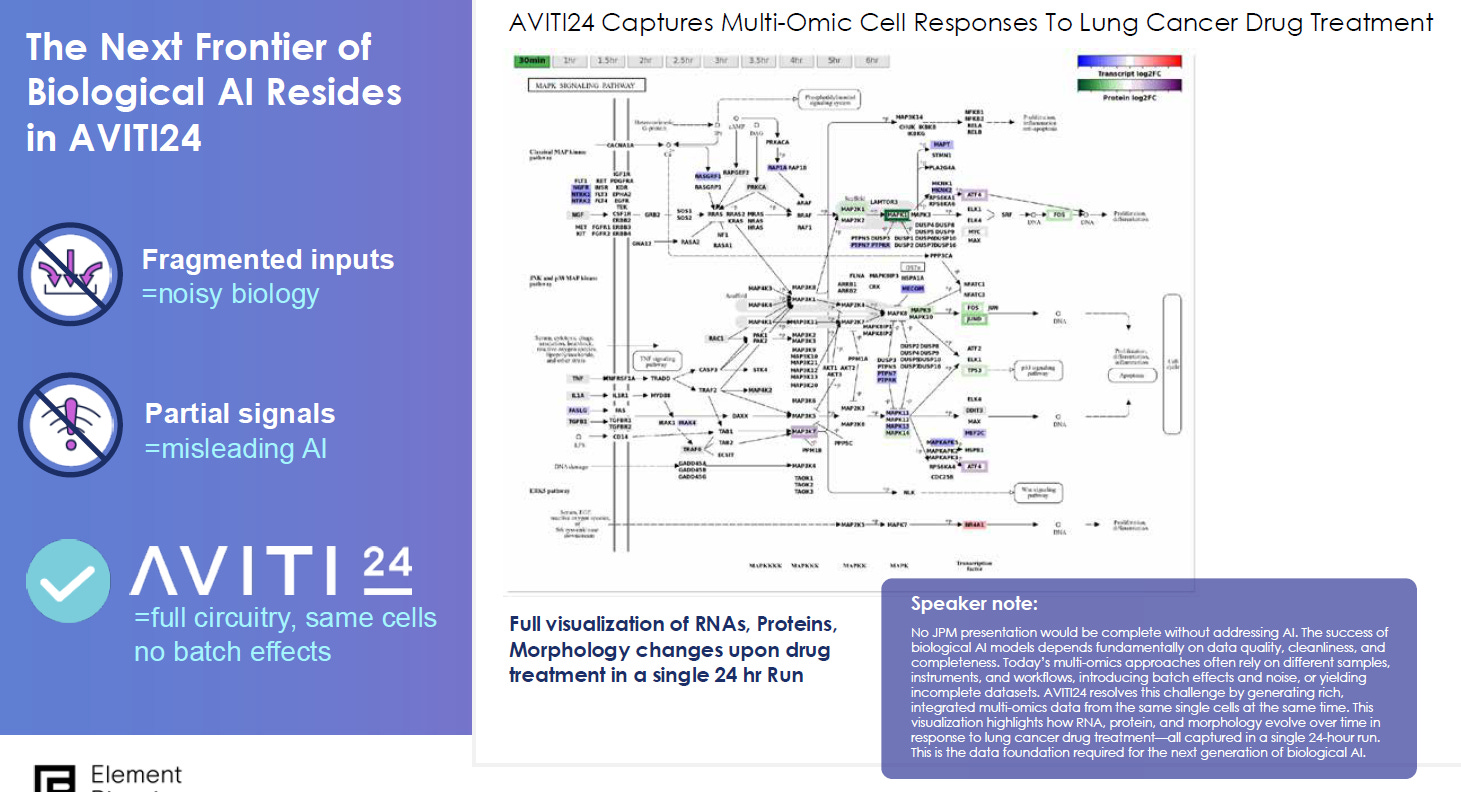
Turning into the use of AI, here Element Bio postulates that the success of AI depends fundamentally on the quality of the data, the cleanliness, and completeness of what it’s trying to represent. AVITI24 is well positioned in generating rich, integrated multi-omics data from the same single cells at the same time. The inclusion of RNA, protein, and morphology evolve over time, for example in response to lung cancer drug treatment, as shown in the slide above. This is the data foundation required for the next generation of biological AI.
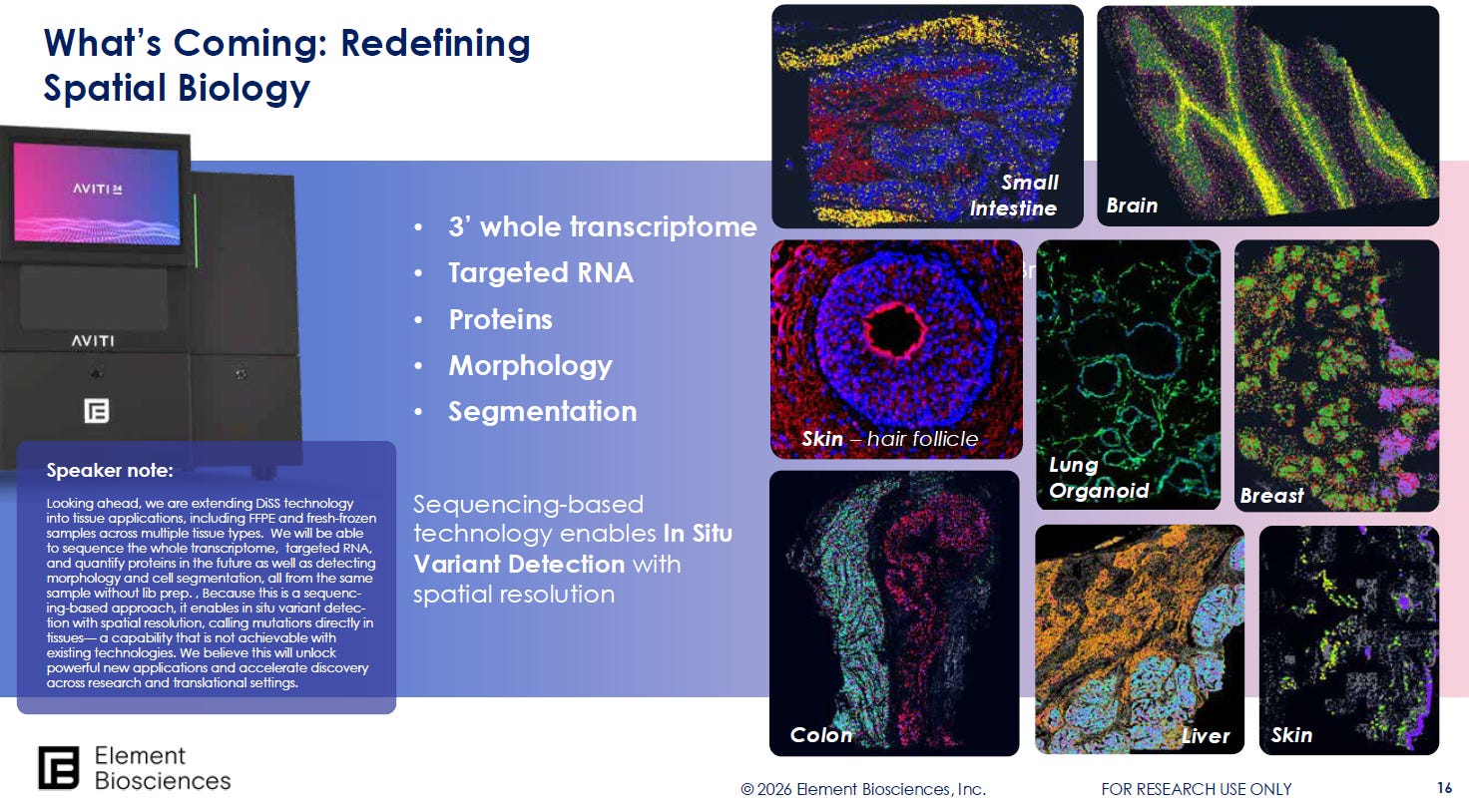
These are all the products that the company already has out there but, what’s coming in 2026? A first important announcement is the ability to assay FFPE and fresh-frozen samples across multiple tissue types. This puts the AVITI24 in direct competition with 10X Genomics Visium/Xenium, NanoString/Bruker GeoMx/CosMx, and more recently Illumina with their Spatial Biology Visium-equivalent product.
Because the Teton detection is sequencing-based, it enables in situ variant detection with spatial resolution, calling mutations directly in tissues — a capability that is not achievable with other existing technologies. No specs for this slide, but we look forward to learn more.
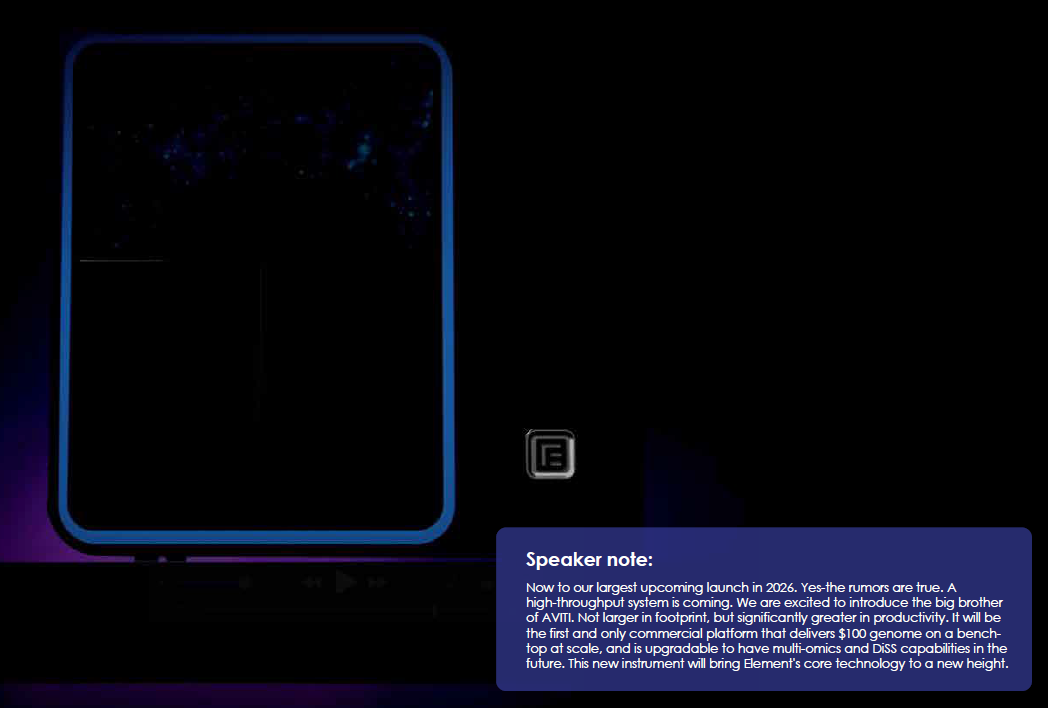
And then the slide that everybody seems to be wanting to learn more: a high-throughput system is coming. A big brother to the AVITI with a similar benchtop footprint, that will be able to deliver $100 genomes and is upgradable to multi-omics and DISS capabilities in the future.
Strategic Positioning
In the lines below, I will be giving my opinion on how serious a threat the products from Element Bio are against established players like Illumina in NGSX (NGS + Multi-omics).
